
Thermo-mechanical Recycling in the tExtended Project
Written by: Aravin Periyasamy, Pirjo Heikkilä, Eetta Saarimäki
VTT Technical Research Centre of Finland
The tExtended project aims to create a sustainable textile ecosystem by optimizing textile flows and reducing waste through advanced recycling technologies. Thermo-mechanical recycling is one of them as it plays a pivotal role in addressing synthetic and blended textile waste streams.
Thermo-mechanical recycling involves remelting thermoplastic materials, such as polyester (PES) and polyamide6 (PA6), to produce reusable granulates or pellets. This thermo-mechanical recycling methodology is widely acknowledged for its economic efficiency and scalability, rendering it highly suitable for deployment in industrial settings. Furthermore, the process leverages existing synthetic textile fibre manufacturing infrastructure, necessitating only minor modifications to accommodate recycled feedstocks. Currently, recycled PES for textiles comes from plastic bottles (i.e., polyethylene terephthalate (known as PET) recycling, but the application of the method from textiles to textiles is still in the demonstration phase, requiring innovations to overcome challenges such as waste identification, polymer degradation, viscosity control, and contamination removal.
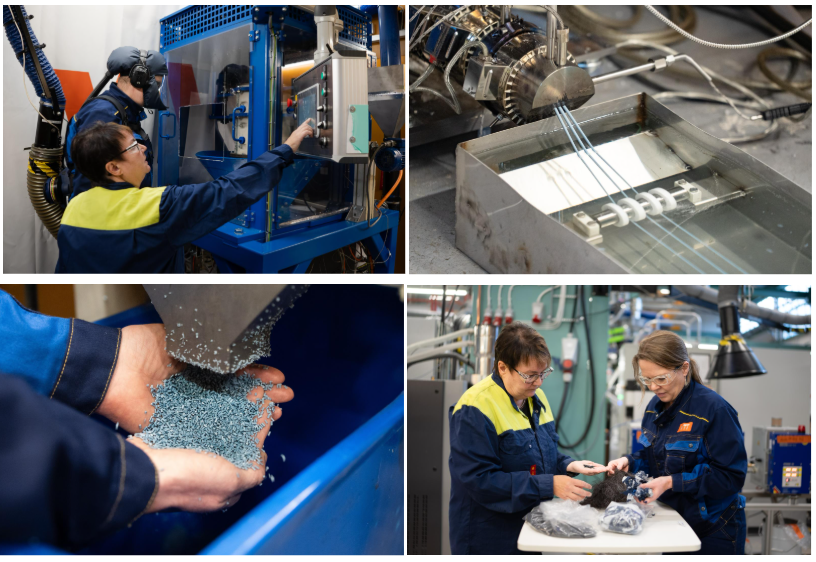
Within tExtended, VTT collaborates closely with partners such as RISE and Centexbel to optimize melt spinning and process parameters like the feedstock purity, implementing standardized procedures or guidelines for textile under post-consumer phase and exploring additive strategies to stabilize polymers during processing. Trials with post-consumer and post-industrial PES waste have demonstrated promising results, paving the way for thermo-mechanical recycling to textile and other products and integration into Real Scale Demonstrator. Under the tExtended project, the key advancements include the utilization of the specialized equipment MODIX extruders (Figure 1), Vacurema® units, and lab-scale spinning lines to ensure recycled polymers meet quality standards for uses like mono- and multifilament yarn production.
By combining technical innovation with collaborative efforts with partners, tExtended showcases how thermo-mechanical recycling can significantly reduce textile waste and support circularity. These developments not only enhance material recovery but also support scalable solutions for fibre-to-fibre recycling, contributing to the broader vision of sustainable textile production. This work aligns with EU sustainability objectives, aiming to reduce textile waste and promote circular economy principles.
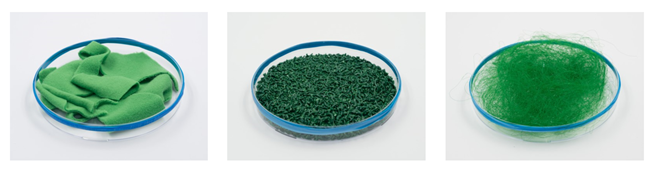
Figure 2 describes the thermo-mechanical recycling process; wherein post-industrial PES fleece fabric is reprocessed into high-quality polymer granulates and subsequently extruded to produce textile-grade filaments within the framework of the tExtended project.
Revolutionising the handling of textile waste with VTT’s cylindrical extruder
The video shows the principle of cylindrical extruder, MODIX. The material fed to the extruder is not directly related to tExtended project but is textile-based waste material. MODIX simplifies the handling of fluffy materials.
Acknowledgement
This project has received funding from the European Union’s Horizon Europe research and innovation programme under Grant Agreement No. 101091575