


Chemical recycling of polyurethane foam waste into recycled polyols for new polyurethane foam applications
The objective of this demonstration was to scale up the glycolysis process for the chemical recycling of flexible polyurethane foam waste in order to recover recycled polyols suitable for manufacturing new polyurethane foam formulations. The demonstration also aimed to validate the process under pilot-scale conditions and assess its reproducibility beyond laboratory scale.
What was achieved and what that learned
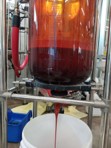
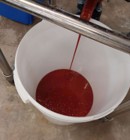
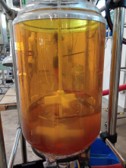
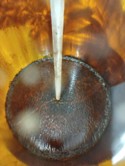
Pilot-scale glycolysis trials were carried out, demonstrating the feasibility of processing kilogram-scale quantities of polyurethane foam under controlled operating conditions. However, unlike the laboratory-scale experiments, the expected liquid-liquid phase separation was not achieved, resulting in a highly viscous single-phase product. Additional experiments at intermediate and laboratory scales reproduced the same behaviour, indicating that the deviation was not caused by the scale-up itself. The work provided valuable insight into the robustness of the process and highlighted the strong influence of raw material characteristics and process conditions on the quality of the recovered polyol. These findings have defined the next optimisation steps required before industrial implementation.
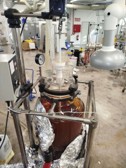
Flexible polyurethane foam waste was chemically recycled by glycolysis using triethylene glycol and adipic acid. The process was first demonstrated in a 50 L pilot reactor, followed by additional validation trials at 10 L and laboratory scale to investigate the reproducibility of the process. The recovered products were visually assessed, sampled for characterisation and compared with the laboratory reference process in order to identify the factors affecting the final product quality.
Future visions
Future work will focus on identifying the root cause of the observed deviation by systematically evaluating the influence of raw material variability and reaction conditions. Once the process consistently reproduces the target polyol fraction, pilot-scale production will be repeated to manufacture larger quantities of recycled polyol for validation in new polyurethane foam formulations under industrially relevant conditions.