


Textile lamination using recycled synthetic leather, for use in a central armrest
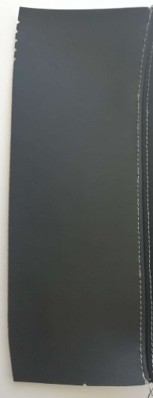
The aim was to assess the quality of the adhesion of the recycled synthetic leather developed at tExtended to the foam typically used in the production of the multi-layered textile employed in an ERT central armrest model. In addition, it was intended that to assess the success of cutting the multi-layered fabric in the format described in the engineering design for the armrest.
What was achieved and what that learned
The recycled synthetic leather demonstrated good adhesion to the lamination PU foam, without significantly altering the flexibility of the multi-layered fabric compared to those produced using ERT materials. It was found that it could be cut on a machine used in ERT’s day-to-day production, without any restrictions.
Firstly, the PU foam and the recycled synthetic leather were cut into samples of a size that allowed a piece to be cut out to form part of an armrest model. Using the web-based textile lamination process, the layers were bonded together on a flat-bed lamination machine. As a final step, the multi-layered textile was cut on a laser cutting machine.
Future visions
The production of this multi-layered textile, which incorporates a textile material made from recycled raw materials sourced from ERT waste, provides preliminary evidence (given that this is an intermediate stage in the production process) of its applicability in products for the automotive sector. It may lead to future interest in its commercialisation. This is also of interest to ERT, as it makes its products more sustainable and in line with trends in the textile market.