

Production of high-quality design products from textile waste stream
In tExtended, we focus on creating a sustainable textile ecosystem by optimizing textile flows and reducing waste through different types of recycling initiatives.
LSJH, about which we have already described the activities with the Finnish designer Rolf Ekroth, has joined forces with Latimmier Oy, which operates under the Latimmier and Ervin Latimer brands. Latimmier focuses on masculine designer-priced ready-to-wear fashion, while Ervin Latimer is a premium home and lifestyle brand.
The collaboration became the KAMU project, a pilot initiative to explore the production of high-quality design products from textile waste stream, both end-of-life/postconsumer textiles and post-industrial/deadstock.
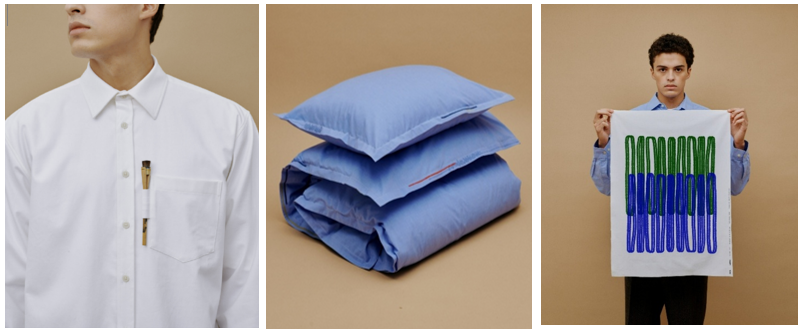
The primary goal was to produce and launch a set of textile products: a shirt, a tote bag, and a textile art/poster, while developing sustainable and commercially viable production processes and creating a scalable pipeline for future circular products. In addition, the KAMU project also aimed to launch a credible circular brand, identifying viable price points, and developing transparent communication around circularity.
LSJH end-of-life bed linens and curtains were used for textile posters and tote bags, with totes primarily garment-dyed after production. Post-consumer shirts serve as raw material for new shirts, complemented by deadstock fabrics, particularly in collars, cuffs, and plackets which require more durable textile properties.
KAMU produced three main results: a shirt, produced in limited sizing, which has been the most complex product. A tote bag, where the production is more straightforward. And a poster, which presented difficulties on excessive material waste and stretch issues. The production of the items highlighted some strong challenges like final sorting, dismantling, and time management, all of which, alongside labour cost, strongly impacted costs and pricing.
Overall, the KAMU project has been highly educational and strengthened the expertise of LSJH and Latimmer in the circular product development. While the project has identified clear potential in the design-driven premium market and is currently in discussion for future collaboration, the success for a collection of this type of products is challenged by the need for a strong branding and transparent communication about the upcycling concept behind the idea, about material origins and characteristics.